City News


Date : 2026-09-03 Source : New Taipei City Government
New Taipei City’s AI Governance Gains International Recognition with WITSA Global AI Award for Public Policy
New Taipei City’s achievements in AI governance have once again received international recognition. The New Taipei City Government’s initiative, “Leading the New Era of Digital Government: New Taipei City’s AI Governance Guidelines and Innovation Validation Framework,” was selected by the Taiwan Innovation Software and Services Association (TISSA) through Taiwan’s national selection process to represent Taiwan in the 2026 WITSA Global AI Award. Competing against entries from countries around the world, New Taipei City stood out to win the top honor in The WITSA Global AI Award for Public Policy. This marks another major international recognition for New Taipei City, following its consecutive first-place wins in the WITSA Global Innovation and Tech Excellence Awards in 2023 and 2024. The latest award highlights New Taipei City’s continued progress from digital innovation toward secure, trustworthy, and responsible AI governance. The award ceremony was held in Taipei on the evening of September 1, with Chen Fu-Tien, Director of the Information Management Center, Research, Development and Evaluation Commission of the New Taipei City Government, representing the city to receive the award. The achievement showcases Taiwan’s capabilities in advancing trustworthy AI and smart city governance at the local-government level.
Founded in 1978, the World Innovation, Technology and Services Alliance (WITSA) is one of the world’s leading international organizations representing the information and communications technology (ICT) industry. Its membership spans five continents and more than 80 major economies. In response to the rapid development of generative AI, WITSA upgraded its Global AI Summit in 2025 and launched the Global AI Award for the first time in 2026. Entries are evaluated based on criteria including real-world impact, scalability, innovation and originality, and responsible AI practices. The AI Public Policy Award specifically recognizes how governments use policy and institutional innovation to promote AI adoption while addressing risk management, information ethics, and citizens’ rights. New Taipei City’s city-level AI trust framework goes beyond establishing guidelines for AI use. It also incorporates practical testing and verification mechanisms, transforming abstract principles of AI governance into a system that is actionable, measurable, and verifiable. This comprehensive approach earned recognition from the international judging panel.
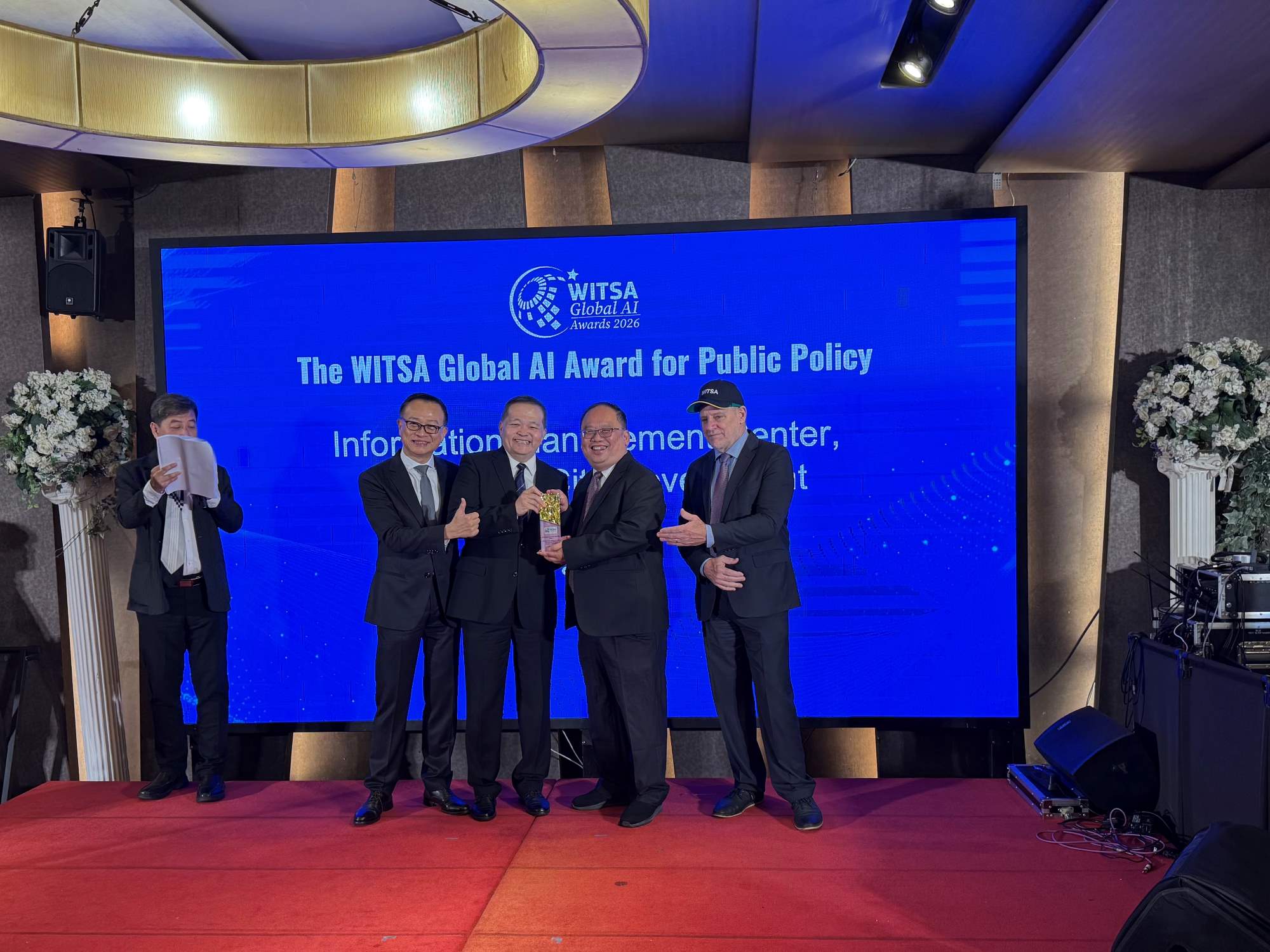
Chen Fu-Tien, Director of the Information Center of the New Taipei City Government, said that AI can improve administrative efficiency and enable governments to provide more convenient and accessible services. At the same time, the adoption of emerging technologies requires governments to address risks including information leakage, algorithmic bias, misinformation, and new forms of cybersecurity attacks. The greatest strength of New Taipei City’s AI trust framework is that it connects policy and institutional requirements with technical verification. Under the New Taipei City’s AI Governance Guidelines, high-risk AI systems used by government agencies must undergo security assessments and risk evaluations by the Artificial Intelligence Evaluation Center (AIEC) before they can be officially deployed. Systems may only be released for public use after successfully completing the evaluation process. This approach ensures that AI safety is not merely a principle documented on paper, but is embedded directly into the processes of system development, deployment, and operation. New Taipei City has also evolved from a traditional cybersecurity model centered primarily on one-time testing toward a full-lifecycle protection framework covering prevention, real-time monitoring, and post-deployment review. To strengthen its ability to identify emerging AI security threats, the city incorporates international frameworks including the OWASP security risks for large language models (LLMs) and MITRE ATLAS into its red-team exercises. The AIEC is also developing testing technologies for different AI application scenarios, including mobile applications, Internet of Things (IoT) devices, and voice-interactive systems. By combining these international security frameworks with local threat intelligence and Traditional Chinese-language use cases, New Taipei City is strengthening its defenses against emerging AI attacks such as prompt injection, while simultaneously addressing information security, ethical considerations, and fairness. The goal is to provide AI services that citizens can use with confidence.
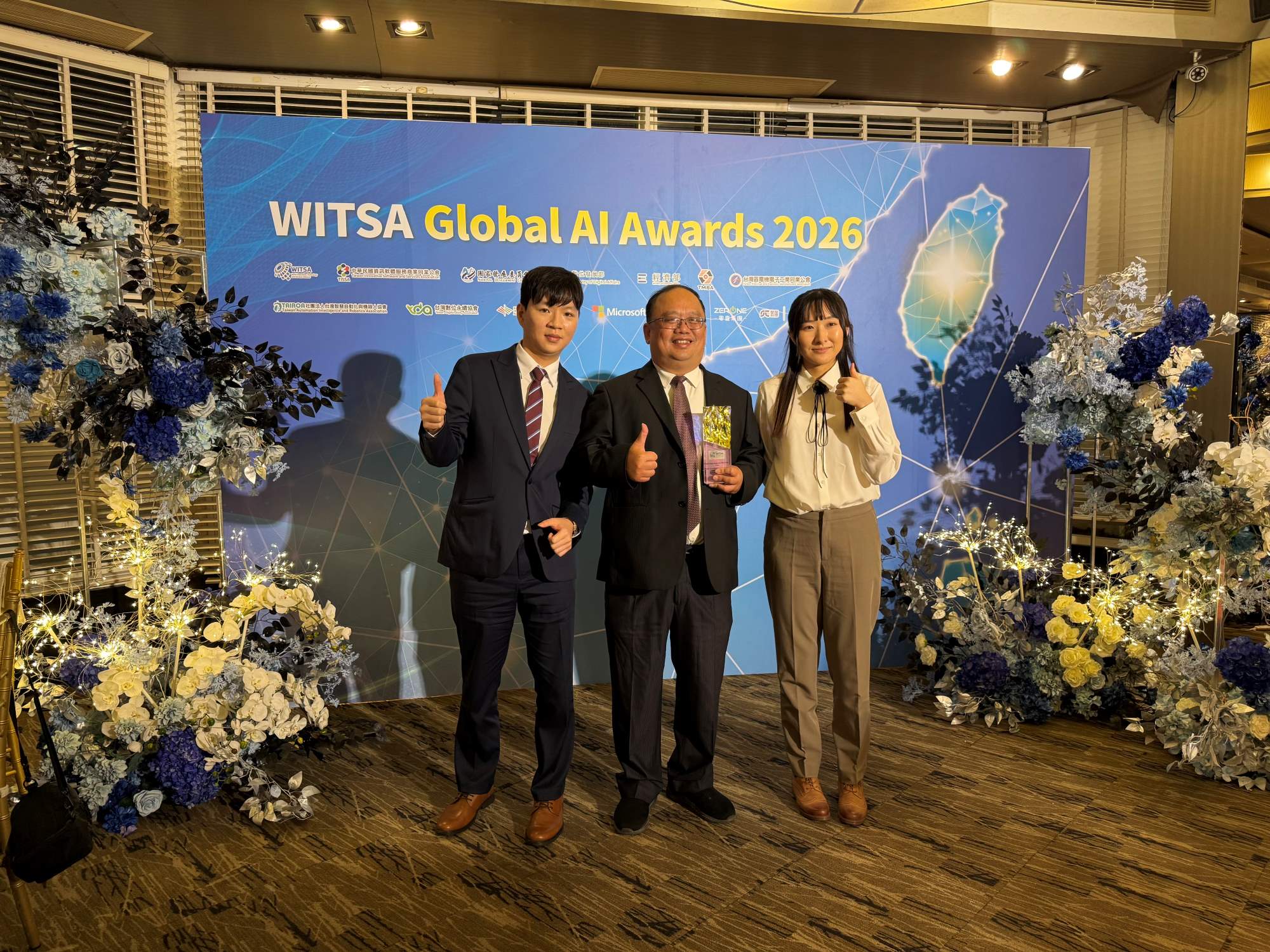
The award not only recognizes New Taipei City’s achievements in smart governance, but also demonstrates that local governments can develop concrete and practical solutions in response to the global rise of AI governance. New Taipei City’s AI trust framework also supports the United Nations Sustainable Development Goals (SDGs), particularly SDG 9, SDG 11, and SDG 16. By integrating institutional frameworks, technical safeguards, and practical verification, the city aims to strengthen the resilience of its digital infrastructure while enhancing transparency, trust, and accountability in public governance. Looking ahead, New Taipei City will continue to transform its award-winning experience into a scalable and replicable governance model. The city is exploring the development of a cross-city mutual recognition mechanism for AI security testing, which could help more local governments establish trustworthy AI governance systems. The City will also continue monitoring the latest international AI threats and security standards, while strengthening automated attack testing and dynamic monitoring of model and data drift. Through international exhibitions and exchanges with cities around the world, New Taipei City will share its experience and advocate for the establishment of cross-city AI threat intelligence-sharing mechanisms. With the goal of ensuring that “AI innovation moves fast, and security governance keeps pace,” New Taipei City is committed to advancing technological innovation alongside public trust. By sharing Taiwan’s experience in urban AI governance with the international community, New Taipei City will continue working toward a safe, trustworthy, and sustainable smart city.
.jpg)
Founded in 1978, the World Innovation, Technology and Services Alliance (WITSA) is one of the world’s leading international organizations representing the information and communications technology (ICT) industry. Its membership spans five continents and more than 80 major economies. In response to the rapid development of generative AI, WITSA upgraded its Global AI Summit in 2025 and launched the Global AI Award for the first time in 2026. Entries are evaluated based on criteria including real-world impact, scalability, innovation and originality, and responsible AI practices. The AI Public Policy Award specifically recognizes how governments use policy and institutional innovation to promote AI adoption while addressing risk management, information ethics, and citizens’ rights. New Taipei City’s city-level AI trust framework goes beyond establishing guidelines for AI use. It also incorporates practical testing and verification mechanisms, transforming abstract principles of AI governance into a system that is actionable, measurable, and verifiable. This comprehensive approach earned recognition from the international judging panel.
Chen Fu-Tien, Director of the Information Center of the New Taipei City Government, said that AI can improve administrative efficiency and enable governments to provide more convenient and accessible services. At the same time, the adoption of emerging technologies requires governments to address risks including information leakage, algorithmic bias, misinformation, and new forms of cybersecurity attacks. The greatest strength of New Taipei City’s AI trust framework is that it connects policy and institutional requirements with technical verification. Under the New Taipei City’s AI Governance Guidelines, high-risk AI systems used by government agencies must undergo security assessments and risk evaluations by the Artificial Intelligence Evaluation Center (AIEC) before they can be officially deployed. Systems may only be released for public use after successfully completing the evaluation process. This approach ensures that AI safety is not merely a principle documented on paper, but is embedded directly into the processes of system development, deployment, and operation. New Taipei City has also evolved from a traditional cybersecurity model centered primarily on one-time testing toward a full-lifecycle protection framework covering prevention, real-time monitoring, and post-deployment review. To strengthen its ability to identify emerging AI security threats, the city incorporates international frameworks including the OWASP security risks for large language models (LLMs) and MITRE ATLAS into its red-team exercises. The AIEC is also developing testing technologies for different AI application scenarios, including mobile applications, Internet of Things (IoT) devices, and voice-interactive systems. By combining these international security frameworks with local threat intelligence and Traditional Chinese-language use cases, New Taipei City is strengthening its defenses against emerging AI attacks such as prompt injection, while simultaneously addressing information security, ethical considerations, and fairness. The goal is to provide AI services that citizens can use with confidence.
The award not only recognizes New Taipei City’s achievements in smart governance, but also demonstrates that local governments can develop concrete and practical solutions in response to the global rise of AI governance. New Taipei City’s AI trust framework also supports the United Nations Sustainable Development Goals (SDGs), particularly SDG 9, SDG 11, and SDG 16. By integrating institutional frameworks, technical safeguards, and practical verification, the city aims to strengthen the resilience of its digital infrastructure while enhancing transparency, trust, and accountability in public governance. Looking ahead, New Taipei City will continue to transform its award-winning experience into a scalable and replicable governance model. The city is exploring the development of a cross-city mutual recognition mechanism for AI security testing, which could help more local governments establish trustworthy AI governance systems. The City will also continue monitoring the latest international AI threats and security standards, while strengthening automated attack testing and dynamic monitoring of model and data drift. Through international exhibitions and exchanges with cities around the world, New Taipei City will share its experience and advocate for the establishment of cross-city AI threat intelligence-sharing mechanisms. With the goal of ensuring that “AI innovation moves fast, and security governance keeps pace,” New Taipei City is committed to advancing technological innovation alongside public trust. By sharing Taiwan’s experience in urban AI governance with the international community, New Taipei City will continue working toward a safe, trustworthy, and sustainable smart city.